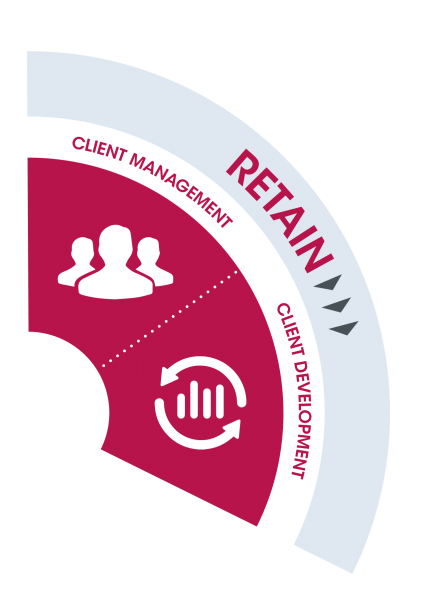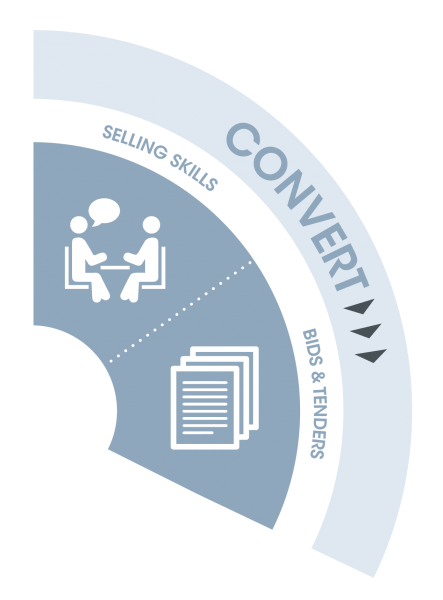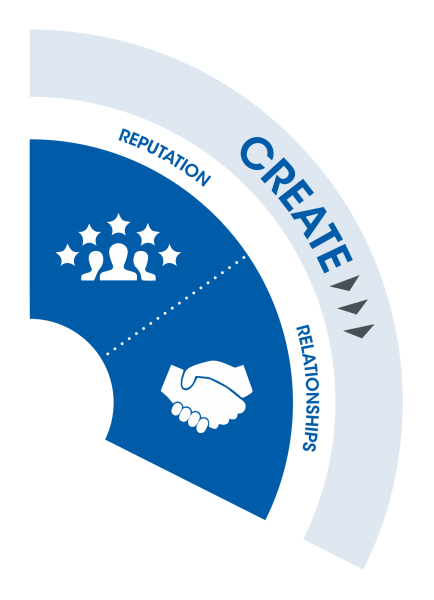
Over the coming months we’ll be exploring the commercial behaviours that win and grow work amongst technical experts.
From getting in the room, to pitching, negotiating and handling difficult client conversations, success in your sector is rarely accidental. It follows a journey, and that journey begins with accessing your chosen clients.
After all, if you are not in the room, nothing else matters.
For many technically strong professionals, business development can still feel quite reactive. Opportunities arrive through referrals, historic relationships or inbound enquiries. The reputation that’s been built over months and years often does a great deal of the heavy lifting. And whilst these channels are valuable, they are not, on their own, a growth strategy.
Across the firms we work with, there is a clear difference between those who occasionally win work and those who consistently generate opportunity. The latter group treat visibility as part of their professional responsibility. They do not view it as self-promotion, and they do not wait until their pipelines look thin. They build presence steadily, long before they need the conversation.
This begins with clarity.
High-performing professionals are specific about who they are trying to reach. ‘SMEs’ or ‘property developers’ is rarely enough. They define sectors, growth stages, geographies and decision-maker profiles with intention. Without that clarity, visibility becomes scattered activity rather than strategic positioning.
Buyers rarely begin their search by looking for a ‘full-service firm’. They begin with a specific problem, whether that is a shareholder dispute, a complex planning challenge, an environmental constraint or a technical design risk. They are not searching for breadth; they are searching for confidence that someone has solved this exact issue before.
Clients are no longer relying solely on referrals or traditional search engines. Many now use AI-driven tools such as ChatGPT to explore advisers and sense-check reputations, drawing on websites, commentary, review platforms and professional profiles.
The importance of this shift is twofold.
Firstly, clarity of positioning becomes critical. If your messaging is broad, generic or capability led, you are harder to categorise (especially in the minds of the ‘bots’!) If your profile and commentary consistently point towards a defined sector or problem area, you are more likely to show up in both human conversations and algorithmic ones.
Second, consistency builds credibility. When your insight, language, experience and visible activity all reinforce the same message or specialism, buyers gain confidence. All helping to reduce the perceived risk in the mind of the buyer.
However, I also add a note of caution, whilst AI tools aggregate and summarise, they do not assess chemistry, they do not observe how you handle challenge or changes in scope. A strong digital footprint may help you get a foot in the door, it does not replace the behaviours that convert and sustain relationships.

Once target audiences are defined, the next shift is behavioural: showing up where those clients already spend time. That may mean industry events rather than general networking. It may mean contributing to sector-specific discussions instead of broad thought leadership. It may mean supporting roundtables, publishing commentary on regulatory changes, or collaborating with complementary advisers in the same ‘world’ the target client is operating in.
The key principle is relevance, and increasingly relevance is tied to perceived specialism, and at its core, the driver remains the same: risk.
Clients do not engage because a firm is capable. They engage because someone appears to understand the commercial pressures they are navigating. Leading with perspective rather than capability often changes the nature of the interaction. Insight into market trends, regulatory shifts, operational risk or growth challenges signals that you are paying attention to their world, not just promoting your own services. Of course, this needs to be genuine and authentic, you are, or are becoming, an expert in this sector/segment.
This ultimately comes back to perceived risk. Appointing an adviser carries consequences. If the outcome disappoints, it reflects on the decision-maker. Buyers are therefore drawn to advisers who feel credible, familiar (hence it’s often hard to lure a prospect away if the incumbent hasn’t put a foot wrong!) and commercially aware.
For leadership teams, this has broader implications.
Firms that embed targeted visibility, supported by clear sector strategy and practical guidance build stronger pipelines. They reduce reliance on a small number of ‘rainmakers’. They develop future leaders who are comfortable operating externally. They position the firm as active in its markets rather than passively waiting for instruction.
Importantly, this does not require everyone to become a natural networker. It requires structure and intent. Clear target markets. Agreed priority relationships. Defined forums. Consistent follow-up discipline. Shared insight themes. When visibility is systematic and planned it becomes manageable rather than overwhelming.
At an individual level, the starting point is simple but powerful:
– Are you clear on the specific clients you want to be in front of?
– Are you visible in ‘their world’ (the environments that matter to them)?
– Are you contributing perspective, or simply describing services?
– Are you building familiarity & credibility before you need the work?
These are not marketing questions. They are commercial leadership questions.
The professionals who answer them deliberately and act on them consistently create a measurable advantage over time. They are more likely to be invited into early-stage conversations. They hear about strategic shifts sooner. They become part of the client’s informal adviser circle. And when formal opportunities arise, they are not starting from cold.
Getting in front of target clients is therefore not an isolated business development activity. It is the foundation of the entire commercial journey. Every later stage (that we will cover in subsequent editions of the 5 Minute Advantage); structuring conversations, cross-selling, pitching, negotiating depends on first securing access.
Without access, expertise remains unseen.
Next month, we’ll explore what happens once you are in the room, and why personal impact in meetings often determines whether an opportunity progresses or quietly stalls.
If this has got you thinking about your own visibility, or the expectations you set within your team, then it has served its purpose. Commercial advantage is the outcome of intentional behaviours, embedded over time.
Until next time,
Gary



 We are a business development consultancy which is passionate about helping our clients develop processes, skills and behaviours that will result in increased sales and improved margins.